
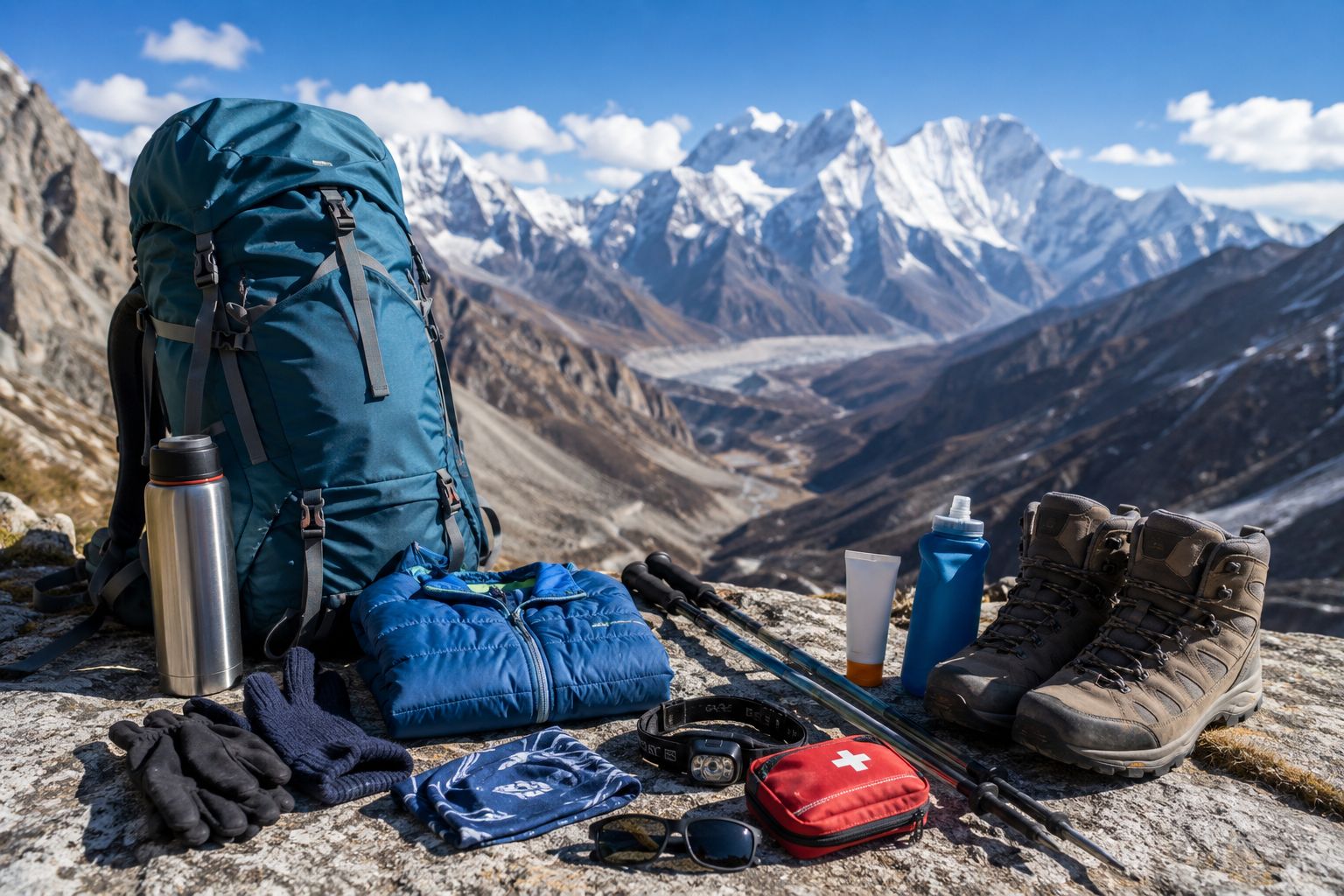
Planning your first high altitude trek? An experienced trekker shares ten practical items that keep you comfortable, prepared, and ready for mountain weather.
Anyone heading to the mountains for the first time usually meets their first reality check at the backpack. At the trailhead, there is always someone carrying half their house in the name of “just in case”. Right beside them stands another trekker, realising, a little too late, that a basic base layer would have helped a lot.
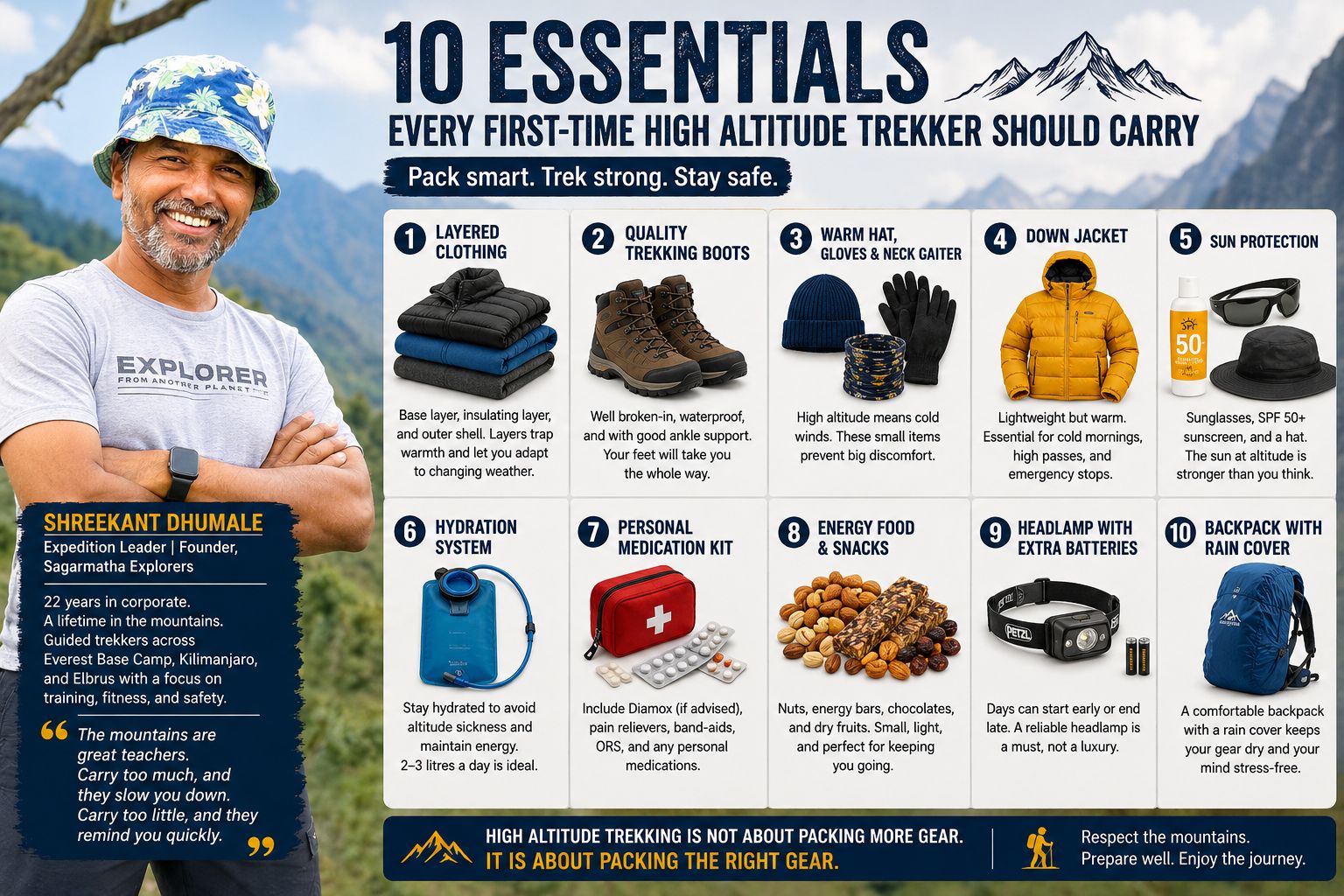
Shreekant Dhumale has seen this scene play out countless times. The Indian expedition leader and founder of Sagarmatha Explorers spent 22 years in the corporate world before turning his focus to high-altitude expeditions. Since then, he has guided trekkers across iconic routes including Everest Base Camp, Mount Kilimanjaro, and Mount Elbrus, with a strong focus on training, fitness, and safety.
His advice is refreshingly simple. “The mountains are great teachers,” says Shreekant. “Carry too much, and they slow you down. Carry too little, and they remind you quickly.”
In his experience, high altitude trekking is not about packing more gear. It is about packing the right gear. These are the ten essentials he always carries before stepping onto a mountain trail.
What you need to pack for your first trek
1. A backpack that becomes part of you (40 to 60L)
Your backpack quickly turns into your closest trail companion, so fit matters far more than people realise. Shreekant says he always reminds trekkers to focus on the waist belt first. When the load sits on your hips, your shoulders get a break, and the long climbs feel far kinder. And never forget a rain cover. A soaked sleeping bag at high altitude can make for a very long night.
A trekking backpack in the 40 to 60 litre range works well for most trips. Myntra lists several practical options with rain covers, multiple compartments, and adjustable support for long trail days.
2. Trekking shoes are your most important investment
Shreekant says this is the one place trekkers should never try to save money. Good trekking shoes with full ankle support protect you on loose rocks, steep trails, and long descents. Waterproof material helps keep your feet dry during sudden rain or slushy sections. His biggest tip is simple. Always break your shoes in before the trek. The mountains are not the place for brand new boots and painful blisters.
Look for sturdy trekking shoes with a strong grip, ankle support, and a waterproof layer such as Gore-Tex. A cushioned sole and breathable lining also make long walking days far more comfortable
3. Easy to take off layering for the mountains
The trekking pro explains that mountain weather rarely stays the same for long. One minute you are sweating on a steep climb, and the next you feel cold the moment you stop moving. That is why layering works far better than a single thick jacket. He usually starts with a base layer, adds a T-shirt, then a fleece or puffer jacket, and finishes with a windproof outer layer that can handle changing weather.
A good layering system starts with a merino wool base layer that manages sweat and warmth. Add a light mid-layer and a protective outer shell so you can adjust clothing easily throughout the day
4. Hydration is more important than you think
At altitude, your body loses water faster than you realise. Shreekant says even breathing at high camps dries you out quickly. By the time trekkers reach around 4000 metres, hydration becomes essential for energy and health. He usually carries two one-litre bottles and sips regularly throughout the day. Warm water in a thermos also helps when temperatures drop sharply.
Lightweight hiking bottles that are easy to refill and pack make this habit easier. Many trekkers also carry an insulated flask for warm water during colder sections of the trek.
5. Hands-free lights or a headlamp
Shreekant laughs when trekkers say their phone torch will do the job. A proper headlamp becomes essential during early summit pushes or late-night walks around camp. When the temperature drops and the wind picks up, you want both hands free to manage gear and balance safely on the trail.
A compact headlamp with adjustable brightness and a comfortable head strap works best. Rechargeable models or ones with spare batteries are practical for multi-day treks.
6. Trekking poles to save your knees
Many young trekkers think trekking poles are unnecessary. Shreekant strongly disagrees. He says poles act like two extra legs, especially during steep descents when the knees take the biggest impact. Using poles properly can reduce pressure on joints and help maintain balance on uneven terrain.
Lightweight trekking poles with adjustable height and comfortable grips are ideal. Collapsible designs fit easily into backpacks when not in use during flatter sections.
7. A just-in-case medical kit
Shreekant believes every trekker should carry a small medical kit. It does not need to be complicated, just practical. Blister bandages, electrolyte sachets, basic pain relief, and personal medication are often enough. The idea is simple. On the mountain, being prepared is part of being responsible.
Compact first aid kits designed for trekking usually include bandages, antiseptic wipes, and essential supplies. They pack neatly into a backpack and can handle most minor trail issues.
8. Real food for real energy
Shreekant often reminds trekkers that their appetite drops at high altitude, even though the body is burning calories constantly. Carrying snacks you genuinely enjoy helps keep energy levels steady during long climbs. Small bites taken regularly can make the difference between feeling drained and feeling strong on the trail.
Energy bars, dark chocolate, and salted nuts work well since they pack easily and provide quick fuel. Choose foods that do not melt easily or crumble inside your backpack.
9. Rain protection as the weather changes fast
Mountain weather can change in minutes. Shreekant says he has seen bright sunshine turn into rain or hail within a very short time. Staying dry becomes important not just for comfort but also for warmth and safety. Wet clothing at altitude can chill the body quickly.
A lightweight poncho paired with rain pants or a good waterproof jacket offers reliable protection. Look for breathable material, so you stay dry without overheating during long climbs.
10. Sunglasses to protect your eyes
Shreekant says trekkers often underestimate how strong the sun becomes at higher altitudes. Snow glare can be intense and may affect vision for hours. That is why a reliable pair of sunglasses is always part of his gear list.
Polarised sunglasses with strong UV protection help shield the eyes from harsh sunlight. Some trekkers also carry yellow-tinted lenses for cloudy conditions and low visibility.
After years of speaking with trekkers and expedition leaders, one thing becomes clear. The mountains reward preparation, not excess packing. Shreekant’s advice keeps things practical and lightweight. Carry what truly supports the trail ahead, leave the rest behind, and the experience becomes lighter, easier, and far more enjoyable.


